YOU OPPOSE ISRAEL AS A JEWISH STATE, BUT WHAT ABOUT ISLIMIC ONES? Letter to New York City mayoral candidate Zohran Mamdani
OCT 25, 2025
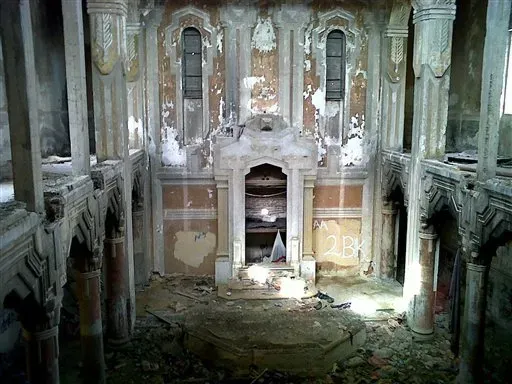
Image of destroyed Dar Bishi Synagogue in Tripoli, Libya following the 1967 ethnic cleansing of the community
Dear Assemblymember Mamdani,
I am a Jewish community leader based in San Francisco, California, directing a national nonprofit that focuses on preserving the heritage, history, and rights of nearly one million Jewish refugees from North Africa and the Middle East. These Jews were dispossessed, ethnically cleansed, and forced to flee oppressive, state-sanctioned antisemitism across the region from the early 20th century to the present. Today, more than half of Israel’s Jewish population descends from this refugee community of Sephardic and Mizrahi Jews, and 190,000 of their descendants live in the New York metropolitan area.
I am writing because I find your public positions deeply confusing and hope you can offer clarity, not only for Jewish Americans, but also for all Middle Eastern minority populations who have endured over a century of oppressive Islamist policies, corrupt regimes, ethnic cleansings, and genocides.
You have stated publicly that you do not support Israel as a Jewish state.
However, I have been unable to find any comparable statements from you challenging other nations that define themselves through religious identity or impose religion-based governance.
Could you please clarify your position regarding the following state policies in the Middle East and North Africa, which have institutionalized discrimination, ethnic cleansing, and violence?
Iran: According to the Constitution of the Islamic Republic of Iran (approved 1979, amended 1989), the government is defined as an Islamic Republic. Article 12 states: “The official religion of Iran is Islam and the Twelver Jaʿfari school, and this principle will remain eternally immutable.” Article 4 provides that “all laws and regulations must be based on Islamic criteria.” Non-Muslims cannot hold certain senior offices in Iran.
Saudi Arabia: Under the Basic Law of Governance, promulgated in 1992 by royal decree, the Kingdom is defined as a “sovereign Arab Islamic State. Its religion is Islam. Its constitution is Almighty God’s Book, the Holy Qur’an, and the Sunna of the Prophet.” The law further states that “the decisions of judges shall not be subject to any authority other than the authority of the Islamic Sharia.” Public practice of any religion other than state-interpreted Sunni Islam is prohibited, and the law requires naturalization applicants to be Muslim; in practice, non-Muslims must convert to Islam to obtain citizenship.
Egypt:Under Egypt’s Constitution (2014, amended 2019), Article 2 declares: “Islam is the religion of the state and Arabic is its official language; the principles of Islamic Sharia are the principal source of legislation.”
Qatar:
Qatar’s Constitution states that “Islam is the State’s religion and Islamic Sharia shall be a main source of its legislation.” Article 50 adds that “freedom to practice religious rites shall be guaranteed to all persons in accordance with the law and the requirements of public order and morality.”
Libya: Under the interim Constitutional Declaration of 2011, Article 1 states that Libya “shall be an independent democratic state … its capital shall be Tripoli, Islam shall be its religion and Islamic Sharia shall be the main source of legislation.” The same article adds that the State “shall guarantee for non-Muslims the freedom to perform their religious rites.”
This is a partial list and given these realities, I ask that you clarify your position on religion-based states and whether you hold the above governments, and others in the region to the same standards you apply to Israel.
Finally, I encourage you to familiarize yourself with the U.S. Department of State’s annual International Religious Freedom (IRF) Reports, which are among the most comprehensive and credible primary sources available.
As you have so passionately articulated your belief that countries should not define themselves by religion, I trust you will take these findings seriously.
Sincerely,
Sarah Levin


Comments